Rock walls on a slope
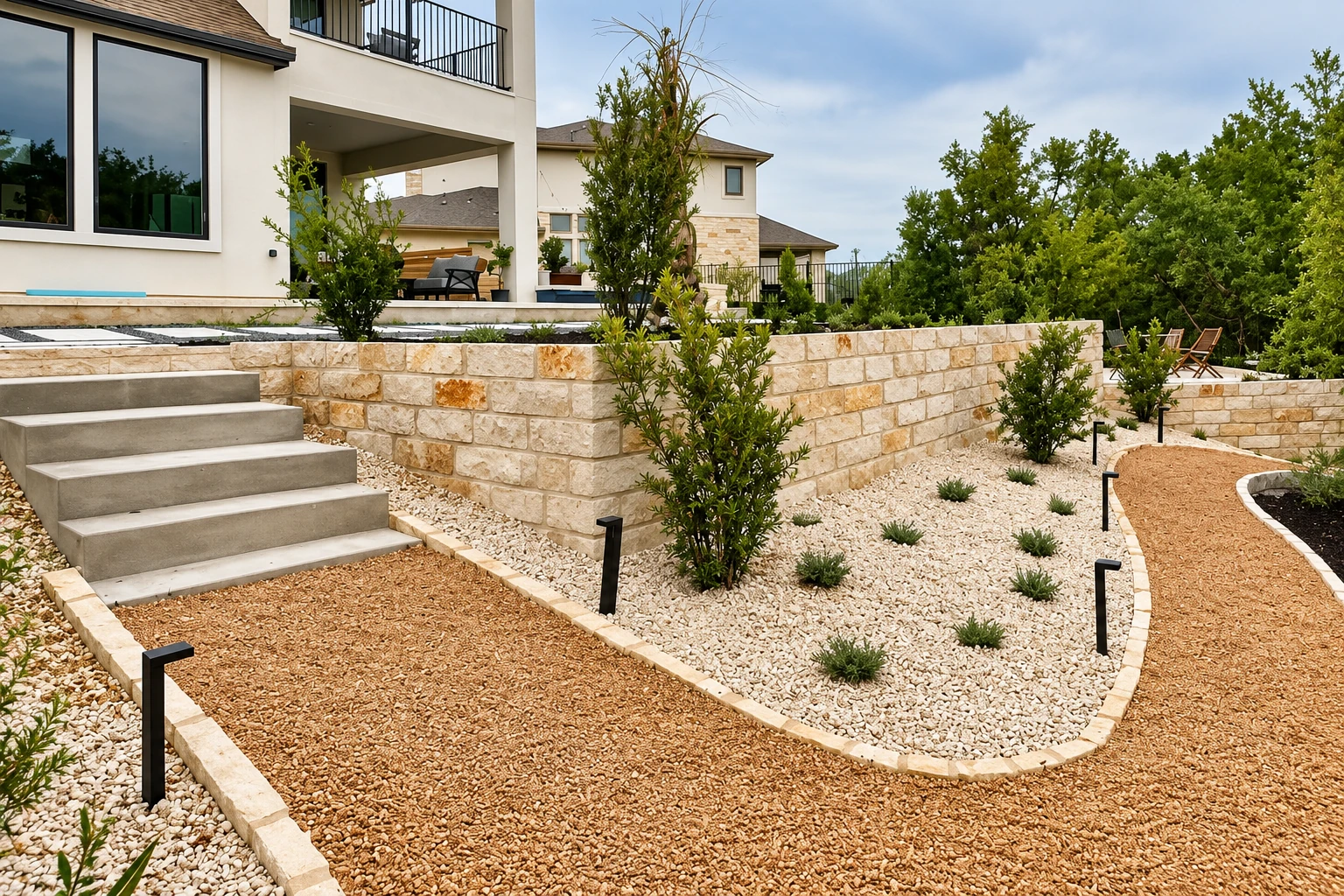
A dry-stacked rock wall holds back a hillside or terraces a sloped yard with no mortar at all. It fits the Colorado look and gives you level ground where soil used to slide.
Rock wall slumping or mortar falling out of your stone? We fix the cause and leave you a wall that stands right.
Stone masonry in Loveland means building and repairing stone walls, from dry-stacked rock walls that hold back a slope to mortared stone walls and the joints that keep them tight and dry.
Most folks call us because a rock wall has started to lean, mortar is dropping out of an older stone wall, or the yard keeps washing down a slope and they've finally had enough. The price mostly comes down to how long and tall the wall is, the stone you pick, whether it's dry-stacked or mortared, how easy the spot is to reach and, on an older wall, how many joints really need work.
The schedule turns on getting the right rock in, how much old work has to come out first and whether the city wants a permit for your wall. I'll walk it with you, ask a lot of questions and write down what the price covers so you can see it all in one place.
I'm the one who comes out, looks the wall over and writes your estimate, and I work on site alongside our masons, so what we talked about is what gets built.
A wall that moved or joints that crumbled had a reason, usually water or a weak base. We sort that out first, because new stone over the same problem just lets you down again.
If your joints are a little worn but still firm, I'll tell you it can wait. Not every old wall needs work this year, and you shouldn't pay for work it doesn't need.
On a dry-stacked rock wall, choosing and fitting each stone is the real work, so we take our time picking rock instead of grabbing whatever's on top of the pile. We dig out, pack a solid base and set the biggest, flattest stones low, then fit each course so every rock sits firm on the ones below and leans back into the slope.
On older mortared stone, we repoint only the joints that truly need it and leave the sound ones alone, because tearing out good mortar just to make it all match is hard on old stone. If the joints are failing because the house itself is settling, we'll talk about foundation repair before we touch a joint, and if you've got brick on the house too, brick pointing works the same careful, joint-by-joint way.
Around Loveland, a lot of what moves a wall is the ground under it. Swelling clay bedrock runs under the Front Range cities from Fort Collins and Greeley south to Pueblo, and it's one of the costliest ground problems in Colorado, so we look hard at drainage and the base before we stack a stone. We're based in Loveland and do the same work across the cities around it, from Berthoud to Windsor and Greeley.
A dry-stacked rock wall holds back a hillside or terraces a sloped yard with no mortar at all. It fits the Colorado look and gives you level ground where soil used to slide.
Garden walls, a low wall along the patio or stone around a bed. Mortar gives you a cleaner, more finished face and tighter joints than a dry wall, which suits a more formal yard.
When mortar is crumbling out of an older stone wall, we clean out the bad joints and fill them fresh. That keeps water from working its way into the wall behind the stone.
Want stone on a house face or planter without building a solid stone wall? I'll tell you honestly whether real stone or stone veneer makes more sense for your spot.
Send the form and we'll get back to you within one business day to set a time. I'll come out, look at your wall and write a free estimate on site, with no obligation.
Let us know where the wall is, roughly how many square feet it covers and whether it's dry rock or mortared stone, so I show up with the right questions.
A couple of close shots of worn or open joints and one of the whole wall help me see what's going on before I ever pull into your driveway.
Tell us whether the house is your primary residence or a rental, because the city's rules on who can do the work change depending on which it is.
These photos show rock walls, mortared stone, joint styles and veneer faces, so you can point to what you like when we meet.
Here's what people ask most about stone walls, repointing, cost and permits in Loveland, answered the way I'd answer them in your yard.
Brick and masonry work in Loveland usually costs about $10 to $30 per square foot. Where your wall lands in that range depends on the stone, whether it's dry-stacked or mortared, how hard the spot is to reach and how much old work comes out first. Our free estimate spells out what your price covers.
Loveland requires a building permit for new construction, additions and alterations, so a new stone wall or a change to one may need one, and the city can confirm it for yours. Plan review is currently estimated at 20 to 30 working days per round, so build that wait into your plans. We check on every job and handle the application and inspections when a permit's needed.
A stone wall needs repointing when its joints are open, cracked, deeply worn or pulling away from the stone. Preservation guidance written for historic masonry says firm, intact joints worn back no more than one-third inch can be left alone. Mortar isn't meant to be permanent, so plan on repointing now and then as part of owning a mortared wall.
A dry-stacked rock wall, often called a rockery, holds back earth with no mortar or steel, relying on the weight, size and shape of each rock. Stone veneer is a lightweight cast product made to look like natural stone, and it isn't load-bearing, so the wall behind it does the structural work. One holds your slope, the other dresses a wall.
Usually not. Preservation guidance for historic masonry warns that premixed bagged mortars are almost always too hard for older walls. National guidance also favors hand chisels and mash hammers for clearing old joints, since they take more labor but pose the least threat of damage, while grinders in unskilled hands can be disastrous on old masonry.
Yes, if it's your primary residence, Loveland lets you do your own work there, though the city also requires a homeowner affidavit. Rentals are different, because structural work in rental homes needs a contractor with a valid City Contractor's License, and you can check one by calling the city at 970-962-2505. We're licensed and fully insured.
It's satisfaction guaranteed on every job, so call (970) 292-7476 or send the form and I'll come out to see your wall.