Foundation repair
We look at where water is going around the house first, then repair cracked or bowed foundation walls so the fix isn't just covering a crack that keeps opening.
Custom Loveland Concrete and Masonry repairs and builds brick, block and stone for homeowners in Longmont, CO, from crumbling mortar joints and leaning chimneys to retaining walls, walkways and paver driveways. We're a masonry contractor based in Loveland.
Longmont calls sound a lot like the ones from Berthoud and Mead, with mortar turning to sand, a cracked step or a garden wall that's started to lean. The city's building guidance rates weathering here as severe and puts the frost line, how deep the ground freezes, at 30 inches, and that explains a lot of it. Water gets into soft joints and under shallow footings, freezes and pushes, so we find where it's getting in before we fix what it broke, and we plan footings for new walls around that depth.
What you'll pay moves with how much brick, block or stone is involved, how far the damage runs once we open it up, how easy the spot is to reach and whether older brick has to be matched. The schedule turns mostly on the weather, since fresh mortar doesn't like freezing nights, and on permits and inspections when a job needs them. Your estimate lists what the price covers, all in one place.
Anyone doing contracting work in Longmont needs a city contractor license, and anyone coming in to perform services needs the city's Sales & Use Tax License. Ask any mason you're comparing about both.
Two of Longmont's ZIP codes reach past the city limits, so a Longmont address doesn't prove you're in the city, where its Building Services department oversees construction and its permits and licenses apply.
I'm the one who comes out to look at the job, and I work on site alongside our masons. We're licensed and fully insured, with satisfaction guaranteed on every job.
We look at where water is going around the house first, then repair cracked or bowed foundation walls so the fix isn't just covering a crack that keeps opening.
Chimneys take the worst of the weather on the roof, so we rebuild loose top courses, repoint open joints and replace cracked crowns, the concrete cap that keeps rain out.
When mortar joints have gone soft or sandy, we grind them out to a clean depth and pack in fresh mortar, then tool it so the new joint matches the old lines.
Spalled bricks, where the face has popped off, let water straight into the wall, so we cut out the damaged ones and set in the closest match we can find.
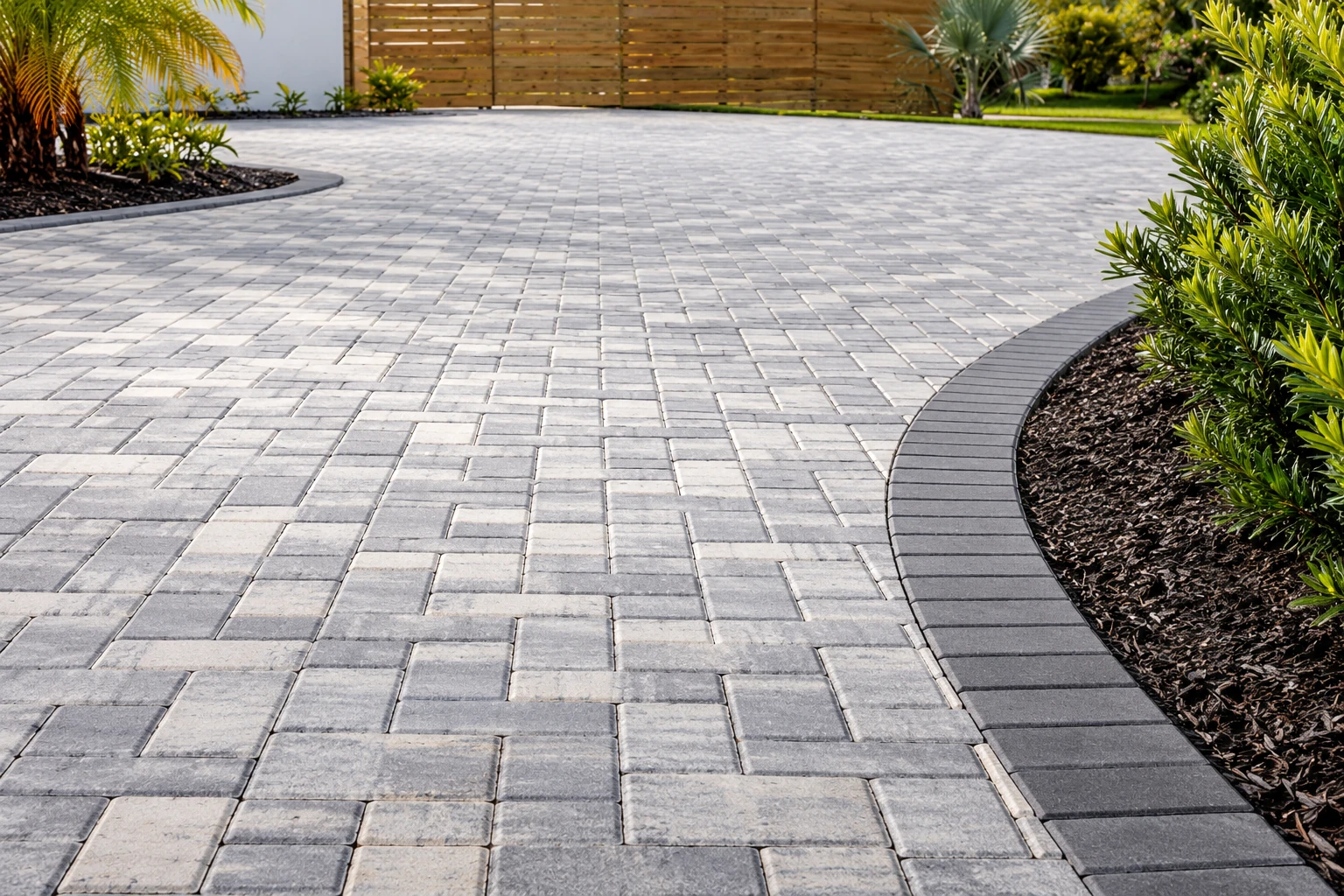
A paver driveway is only as good as what's under it, so we dig down and pack a gravel base before setting pavers that flex with the ground instead of cracking.
Most leaning walls we see failed from behind, where water built up with nowhere to go, so we build new ones on a solid base with gravel and drainage behind the block.
For older brick and stone, we clean gently, repair what's failing and repoint with a mortar suited to the masonry, because mortar that's too hard can crack the brick around it.
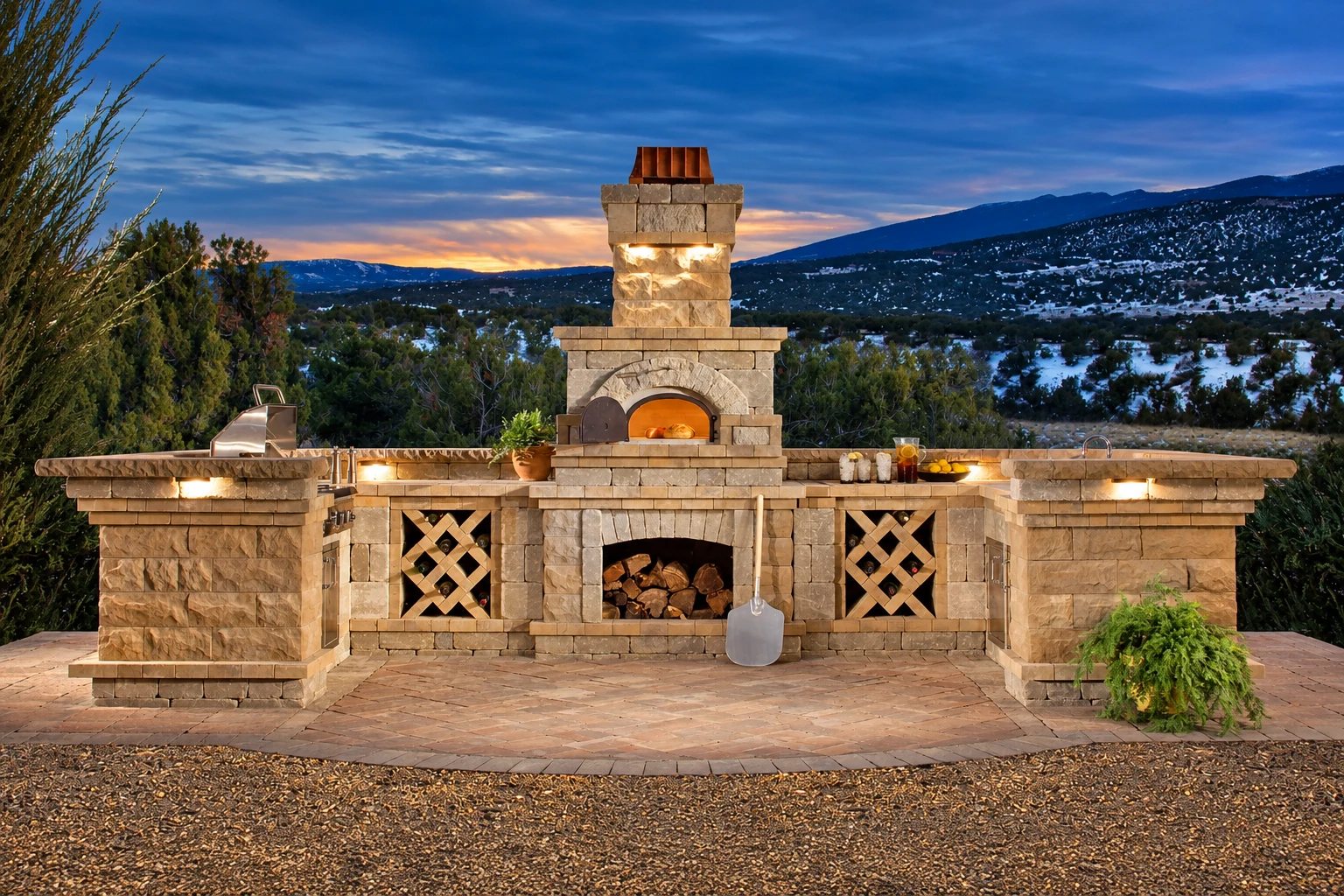
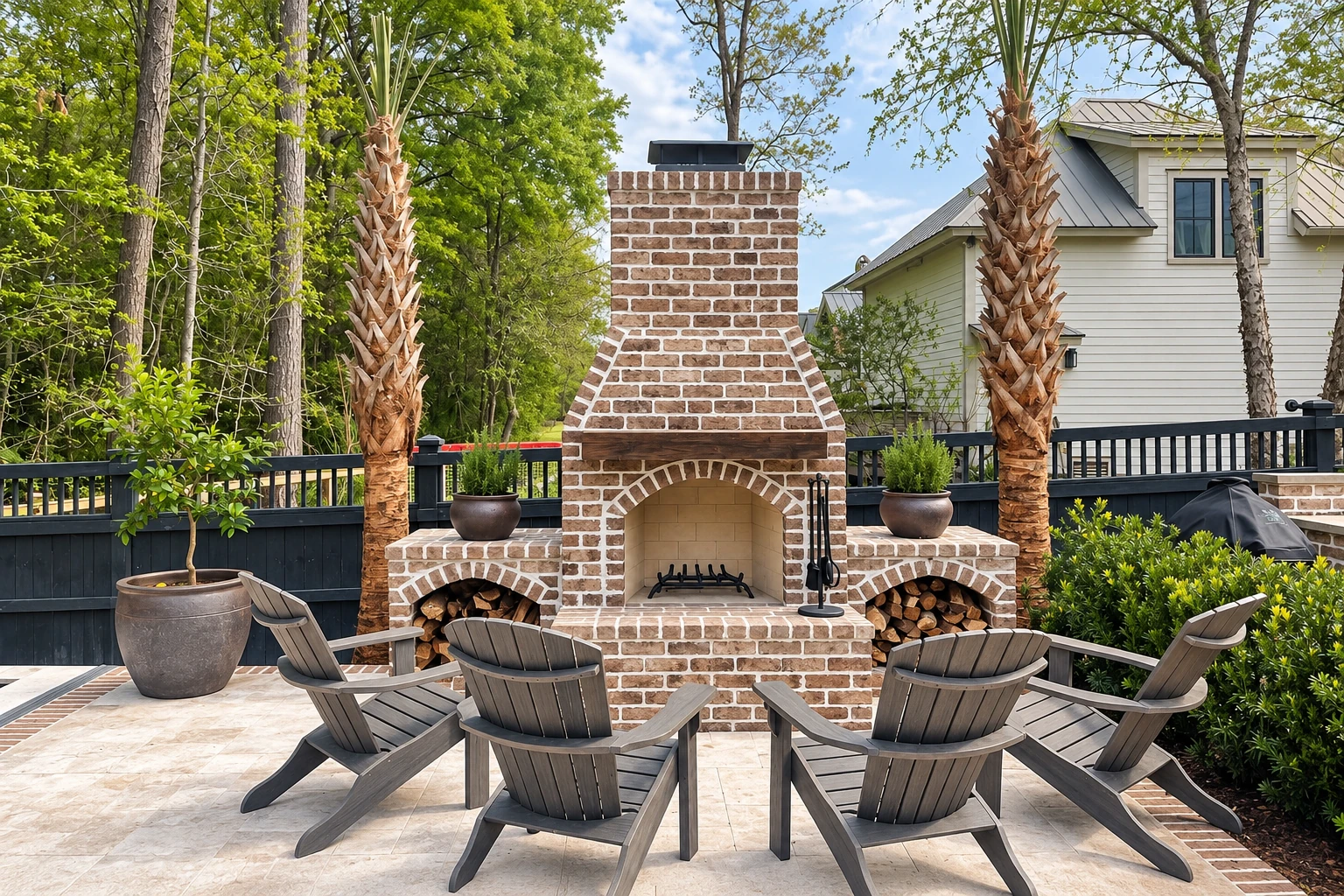
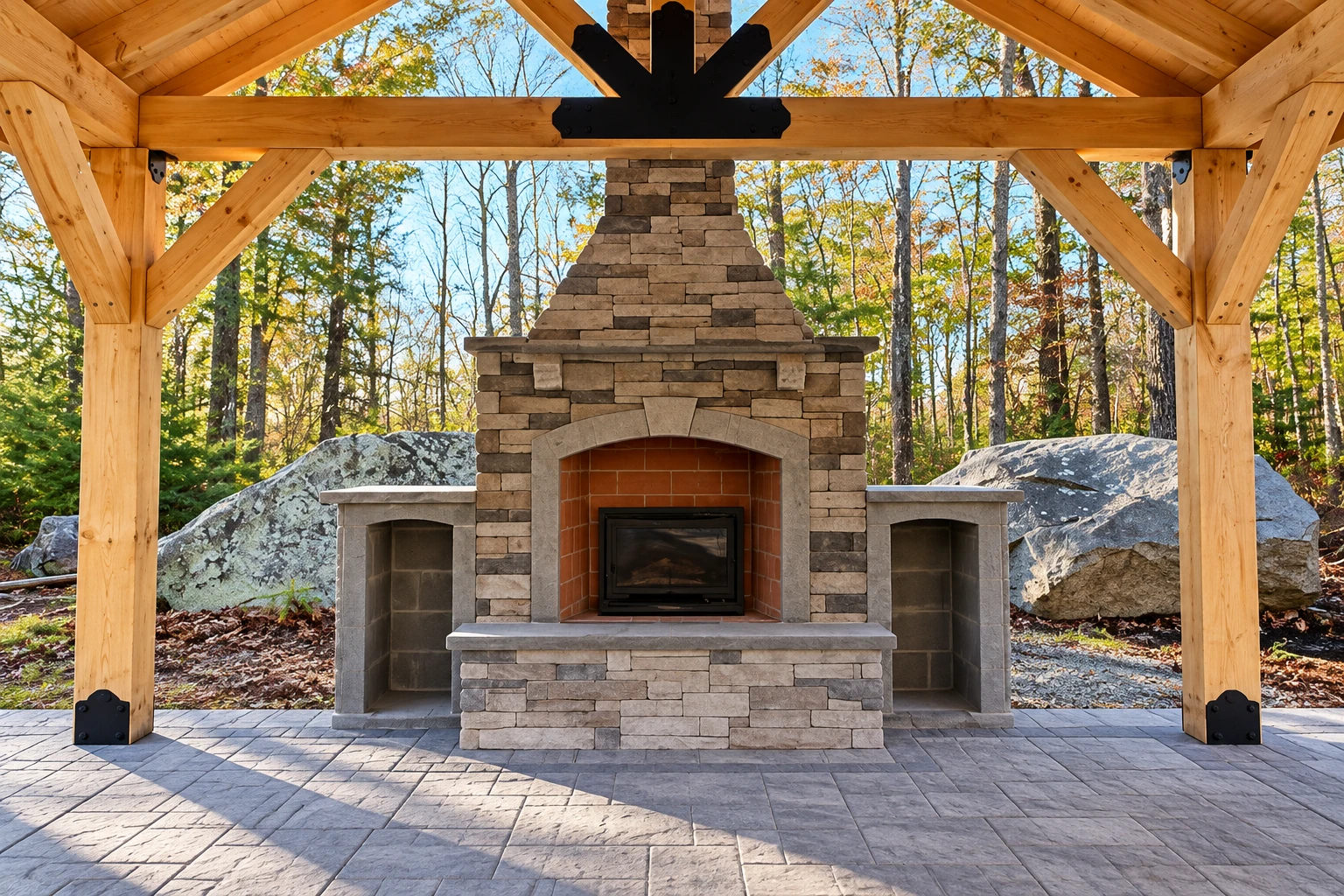
We build masonry fireplaces and surrounds and rework tired ones, laying the firebox, hearth and face in brick or stone to suit the room and the way you use it.
Stone veneer, a thin stone facing over a wall, usually fails when water gets trapped behind it, so we put in the backing and drainage layers before any stone goes on.
Block walls for yards, privacy or garden beds go up on a poured footing, with steel and grout in the hollow cores wherever the wall needs strength.
For additions, garages and crawlspaces we lay foundation block on a footing set at the right depth, keeping courses level and square so the framing above sits true.
We build grill islands, counters and bar walls in block, brick or stone, planning the gas, power and water runs with your other trades before the first course goes down.
Sunken and heaved walks usually come down to a thin base, so we build a packed base and edge each path in brick, stone or pavers that sit flat underfoot.
We lay new brick garden walls, columns and screen walls on proper footings, with caps that shed water off the top so the joints below don't take it.
Natural stone walls, steps and accents get fitted by hand, so we sort and shape each stone on site and set it to carry weight, not just to look good.
When just a few joints have cracked, we fill those with fresh mortar before water gets behind the brick, and I'll tell you straight if the rest of the wall can wait.
Send the form and we'll get back to you within one business day to set a time. I come out, look the job over and write a free estimate listing what the price covers, with no obligation.
Describe what you've spotted and how long it's been going on, like joints turning to sand or a wall that's started to lean, because how fast it's changing tells me a lot.
Give us the street address, not just the ZIP, so I can check the city limits and the building department's rules before I come out and not after.
Our hours run Mon–Sun, 7 AM–11 PM, so you can call (970) 292-7476 after work or on a weekend if that's easier than filling in the form.
These are the questions Longmont homeowners ask before a masonry job, about permits, being your own contractor, flood zones and old fireplaces.
Many do. The city requires a building permit for new construction, any addition or alteration to an existing building and any repair involving structural members. Its list doesn't name every masonry job, so I check with the Building Inspection Division, and when a permit's needed we handle the application and set up the inspections. You can reach the division at (303) 651-8332.
Yes, if the home is your primary residence when you submit for the permit and it isn't a rental or meant for resale. Anyone else needs the city contractor license mentioned above, and the city sets out both rules on its contractor information page. If you go that route, I'm glad to explain what the masonry involves.
Look your address up on the city's Floodplain Inquiry Map, which shows the regulatory floodplain zone your property is in. Five creeks in the city have mapped floodplains, and if your property sits in a special flood hazard area, a Floodplain Development Permit is required before any construction starts. FEMA and lenders use the same map to decide whether you need flood insurance.
Yes, if taking out the old fireplace means interior demolition, because the city requires asbestos testing and a completed demolition permit application. If asbestos turns up, the city wants a copy of the approved State of Colorado permit and a clearance report before it issues the demolition permit. At the estimate I'll look at what has to come out so you know early.
Longmont is one of the cities we work in from our base in Loveland, and the ones below have their own pages. If yours isn't listed, call or send the form and ask.
Most masonry trouble grows a little with every freeze, so call (970) 292-7476 or send the form while the fix is still a small one.