Foundation repair
Cracks and bowing in a foundation wall usually trace back to water or soil pushing against it, so we track down the cause before we repair the wall itself.
Custom Loveland Concrete and Masonry is a masonry contractor based in Loveland, and we work in Fort Collins repairing worn brick, chimneys and foundations and building retaining walls, walkways, stone veneer and paver driveways.
Fort Collins is a short drive north of our base in Loveland, and the calls we get there tend to split two ways. Older brick houses near the middle of town usually have mortar joints crumbling out, chimneys losing bricks near the top and steps that have settled, while newer neighborhoods ask us for stone veneer, retaining walls where a yard slopes, walkways and paver driveways.
What moves the price is usually how far the damage runs past what you can see, how closely we have to match old brick and mortar, how easy it is to get to the spot and the materials you pick. The schedule mostly turns on the city permit and its inspections, and on how long a good brick match takes to find, so your own number and timing come at the estimate.
The City of Fort Collins issues building permits, and when it emails you about one, the message comes from an address ending in @fcgov.com or @fortcollins.gov, so anything from another address isn't the city. The city also handles business and sales tax licensing, and its permits and licensing page lists the license requirements and current tax rates if you want to check. We also work in Greeley, Windsor and Wellington.
I'm the one who comes out to look at your job and write the estimate, and I'm on site alongside our masons, so the person who priced it is there while it's built.
We check with the city's building department on every Fort Collins job, and when a permit is needed we handle the application and set up the inspections so you aren't chasing paperwork.
A patch over a leak or a weak base just lets you down again, so I look for why the joint crumbled or the wall moved before we fix the part that shows.
Cracks and bowing in a foundation wall usually trace back to water or soil pushing against it, so we track down the cause before we repair the wall itself.
Older chimneys often show loose bricks near the top and a cracked crown, the concrete cap that sheds water, and we rebuild what's failing instead of smearing mortar over it.
We grind out worn mortar joints to a steady depth and pack in fresh mortar matched to your brick, so the joints stay softer than the brick and wear out first.
Spalled or cracked bricks usually mean water is getting in somewhere, so we replace the damaged ones with the closest match we can find and deal with the water too.
A paver driveway holds up when the base under it is dug deep enough and packed in layers, which is where we spend most of our time before a single paver goes down.
Yards that slope toward the house or the street often need a wall, and we build it on a proper footing with drainage and gravel backfill behind it to let water out.
On older brick and stone, we clean gently, repoint with mortar suited to the age of the wall and replace only the pieces that truly can't be saved.
We build masonry fireplaces and surrounds, laying the firebox, hearth and face in the brick or stone you pick, and we talk through the size and look before ordering anything.
Stone veneer on newer Fort Collins homes is only as good as what's behind it, so we get the water barrier and metal lath right before the first stone goes on.
Block walls for yards, garden beds and property lines go up on a solid footing, with the cores filled and reinforced where the wall needs it, so they stay straight.
For additions and new outbuildings, we lay block foundation walls on a level footing and keep every course plumb, because an inch off at the bottom shows up at the top.
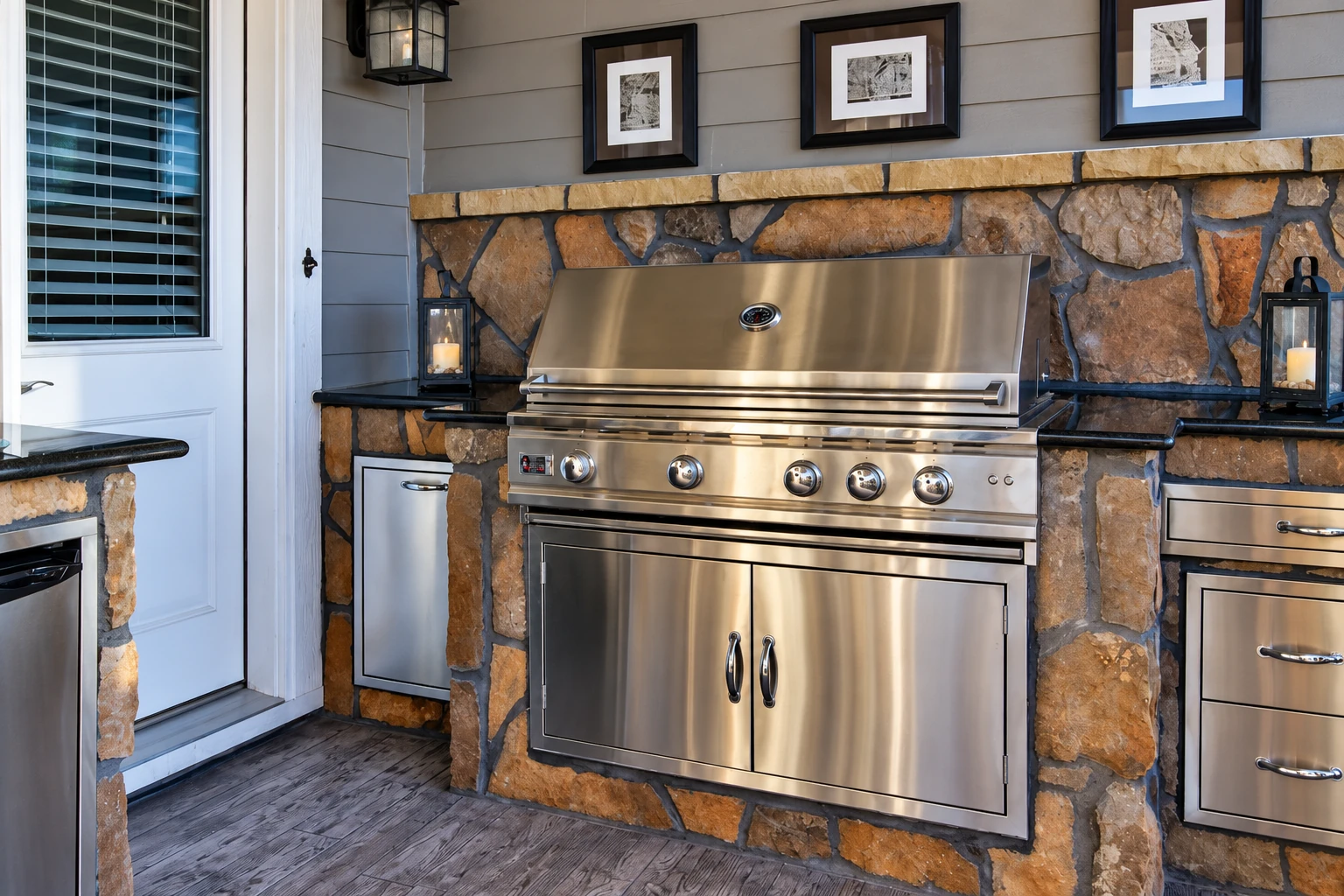
We build outdoor kitchen counters, grill surrounds and bar walls in block faced with stone or brick, leaving space for the gas and power lines other trades will run.
A walkway that heaves or sinks usually had a thin base, so we dig out, pack the gravel in layers and set brick, stone or pavers with a slight pitch for drainage.
New brick garden walls, columns and piers start with a footing below the topsoil and a mortar mix suited to the brick, so the wall has something solid to stand on.
We lay natural stone walls, steps and columns, fitting each piece by hand so the weight sits on the stone below it and not on the mortar.
When only a few joints are cracked or missing, pointing those sections can hold off a full repoint, and I'll tell you honestly if the rest of the wall can wait.
Send the form and we'll get back to you within one business day to set a time. I'll come out, look the job over and write you a free estimate, with no obligation to go ahead.
We write down everything the price covers so you can see it all in one place, and if a line doesn't make sense, I'll walk you through it on the spot.
I'll ask what you've noticed, when it started and what you'd like the finished job to look like, because those answers tell me where the trouble is coming from.
We're licensed and fully insured and have been in business since 2023. Satisfaction guaranteed on every job, whether it's a few joints of pointing or a brand new wall.
Most questions we hear from Fort Collins homeowners before a masonry job are about permits, so here are the straight answers.
Often, yes, because the City of Fort Collins says most construction projects need a building permit. Some work, like a fence up to 6 feet tall, is exempt but still has to meet city codes. You can ask the city's building services at 970-416-2740, weekdays 8 a.m. to 5 p.m., or at buildingservices@fortcollins.gov, and we check with them before starting yours.
A Fort Collins permit expires after 180 days with no activity, but each inspection extends it another 180 days. That's why we set up inspections as each stage of the work is ready instead of letting a job sit, so the permit keeps moving along with the work.
If the county serves your address, Larimer County's permit guide says work covered by building codes generally needs a permit before it starts, and that guide applies to homes and their accessory structures. When you're unsure, the county suggests calling its Building Division at 970-498-7700. We check with whichever office covers your address, and when a permit is needed, we handle the application.
These are the cities with their own page on our site, and we work in plenty of others around Loveland too. If yours isn't listed, call or send the form and ask.
We take calls seven days a week from 7 AM to 11 PM, so call after work once you've had a good look at it.