
Foundation repair
When a basement wall shows stair-step cracks or a corner has dropped, we find out what's pushing or settling it, then repair the block or concrete with that in mind.
Custom Loveland Concrete and Masonry is a masonry contractor based in Loveland, CO. We repair crumbling brick joints, chimneys and foundations, and build retaining walls, walkways, paver driveways and stone work for homes across the city.
Loveland is where we're based, so most of my week is spent on houses here. I learned masonry on a municipal crew and started this business in 2023 to bring that same care to people's homes. Near downtown we see a lot of older brick with joints gone soft and sandy and chimneys that need attention. In the newer neighborhoods it's more often a block retaining wall that's started to tip or a paver drive that's sunk in spots.
What moves the price is how much masonry is involved, how far the damage goes once we open it up, how hard the old brick and mortar are to match, and whether a wall needs a new base under it. The schedule mostly turns on whether the City of Loveland needs to review the work and on the materials we're ordering. Your estimate gives you your own figure in writing.
We work well past the city limits too, in places like Longmont, Berthoud and Fort Collins, and those are just some of the cities we go to.
A crumbling joint or a tipping wall is usually telling you about water or a weak base underneath, so we find that and fix it before we rebuild what you can see.
On older Loveland houses we match new mortar to the old, because mortar that's harder than the brick can crack or chip the brick face over time.
If a hairline crack or a few tired joints can wait a while, I'll tell you so, and I'll show you what to keep an eye on in the meantime.
When a basement wall shows stair-step cracks or a corner has dropped, we find out what's pushing or settling it, then repair the block or concrete with that in mind.
Chimneys tend to lose mortar near the top first, where they're most exposed. We repoint the joints or rebuild the concrete cap on top and the upper rows of brick.
On brick homes with sandy, recessed joints, we rake out the worn mortar, fill the joints to match the brick, then run a thin contrasting line for crisp edges.
Cracked, chipped or loose bricks usually show up around steps, windowsills and the corners of older houses. We cut out damaged ones and set replacements matched in size and color.
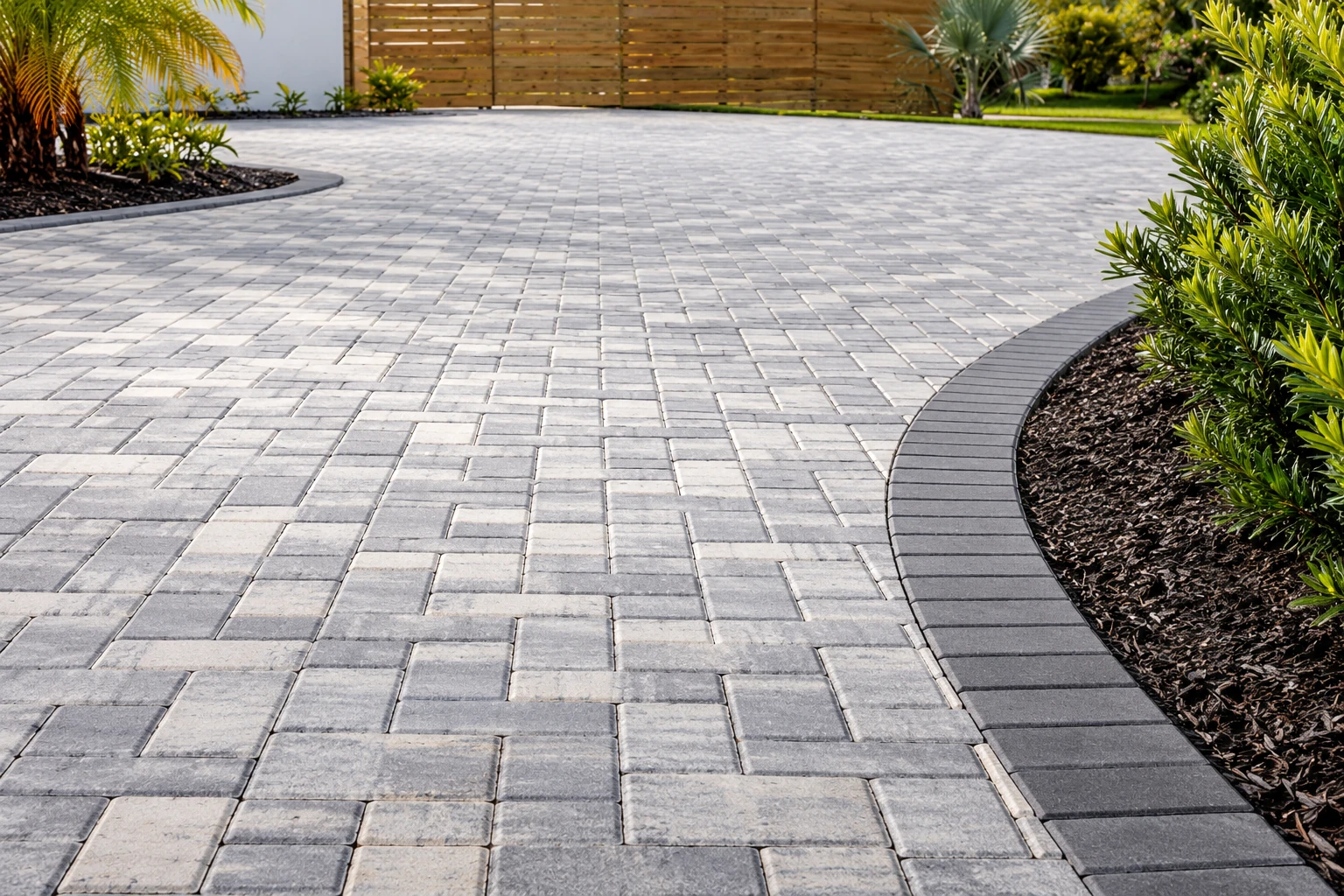
A paver driveway holds up when the base under it is dug deep enough and packed in layers, so that's where we spend our time before the first paver goes down.
Where a yard steps down from the house, the wall holding back that soil needs drainage behind it and a solid footing, and we build both in before stacking.
For older brick and stone that's worn, stained or patched over the years, we clean gently, repair what's failing and match mortar so the house still looks like itself.
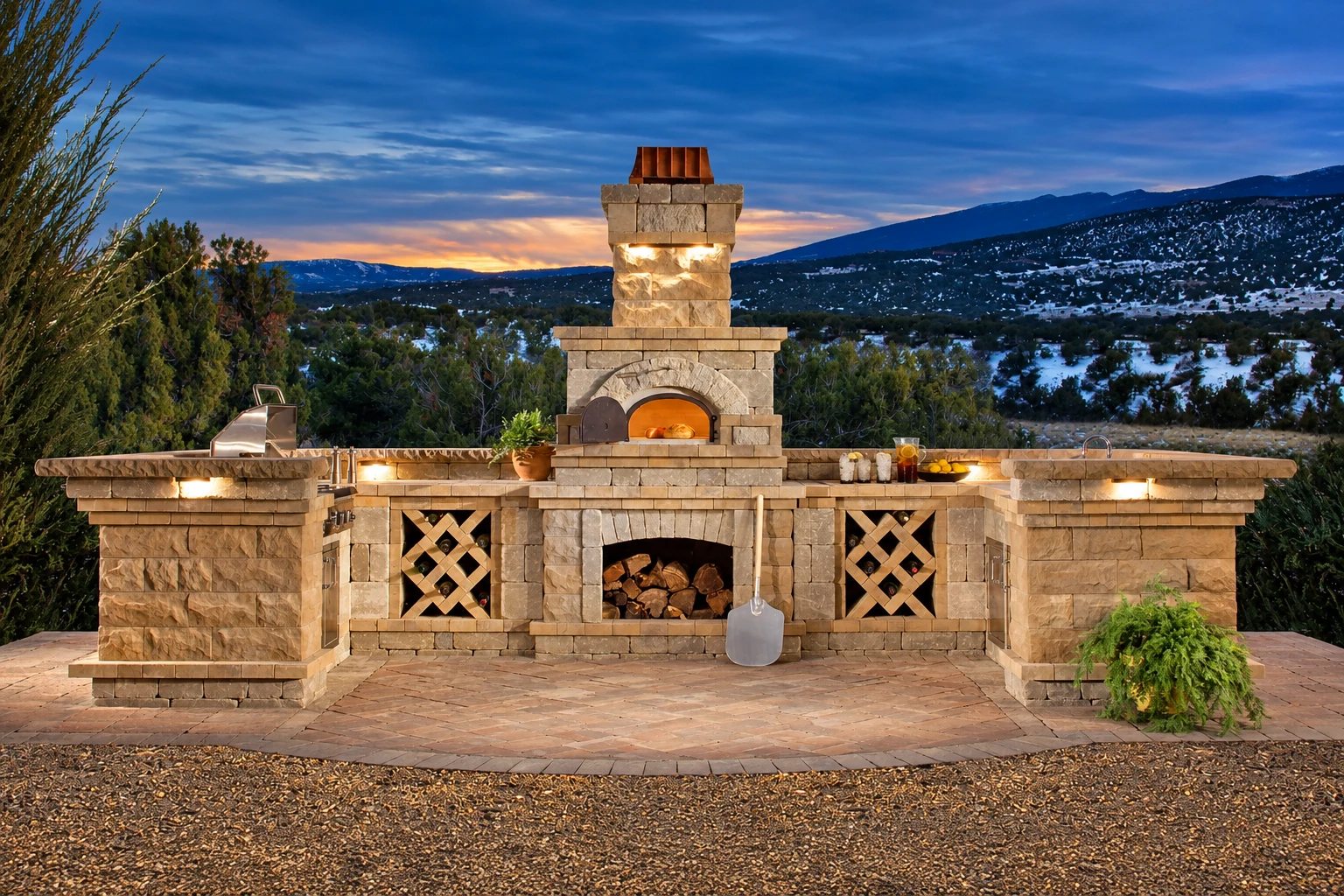
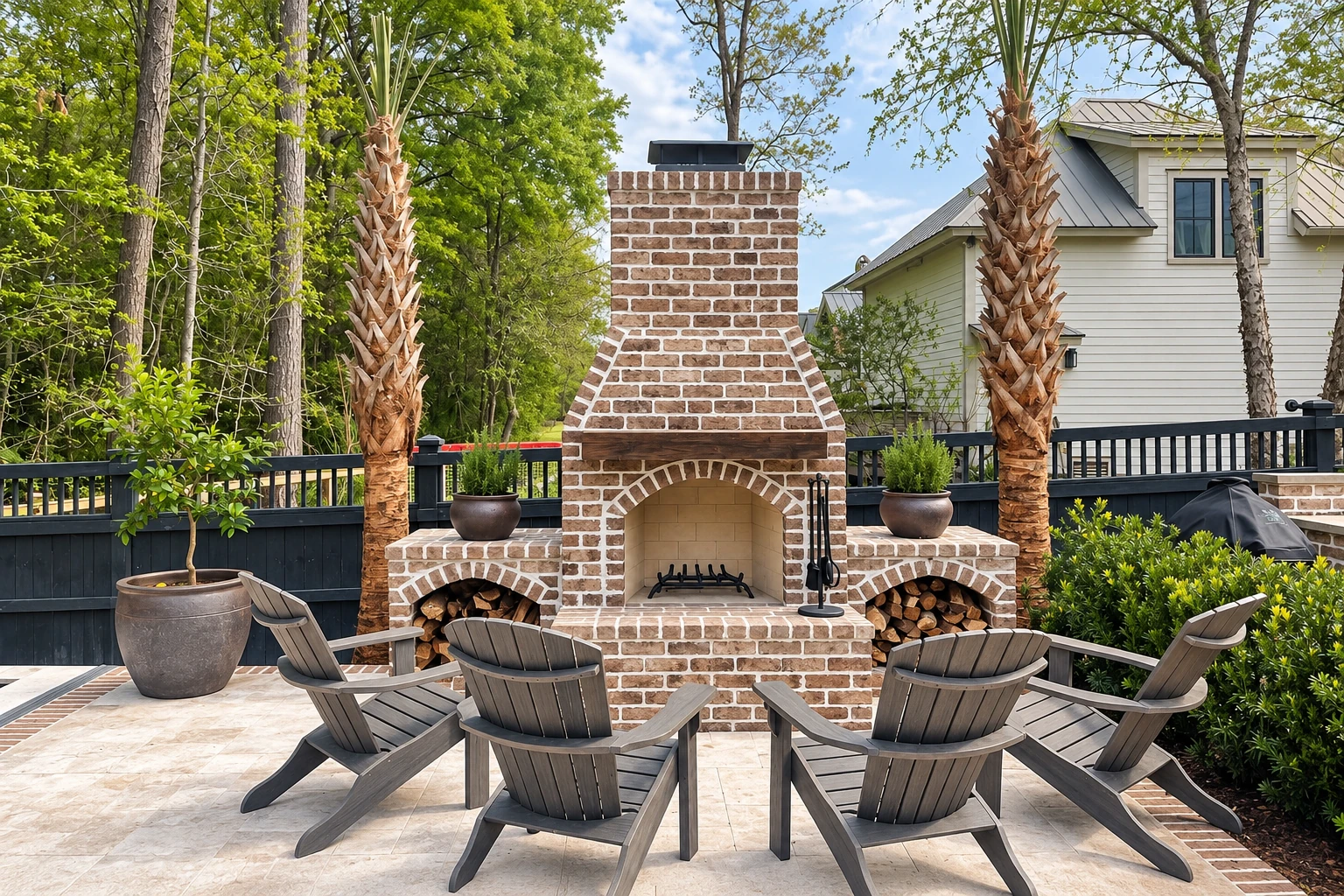
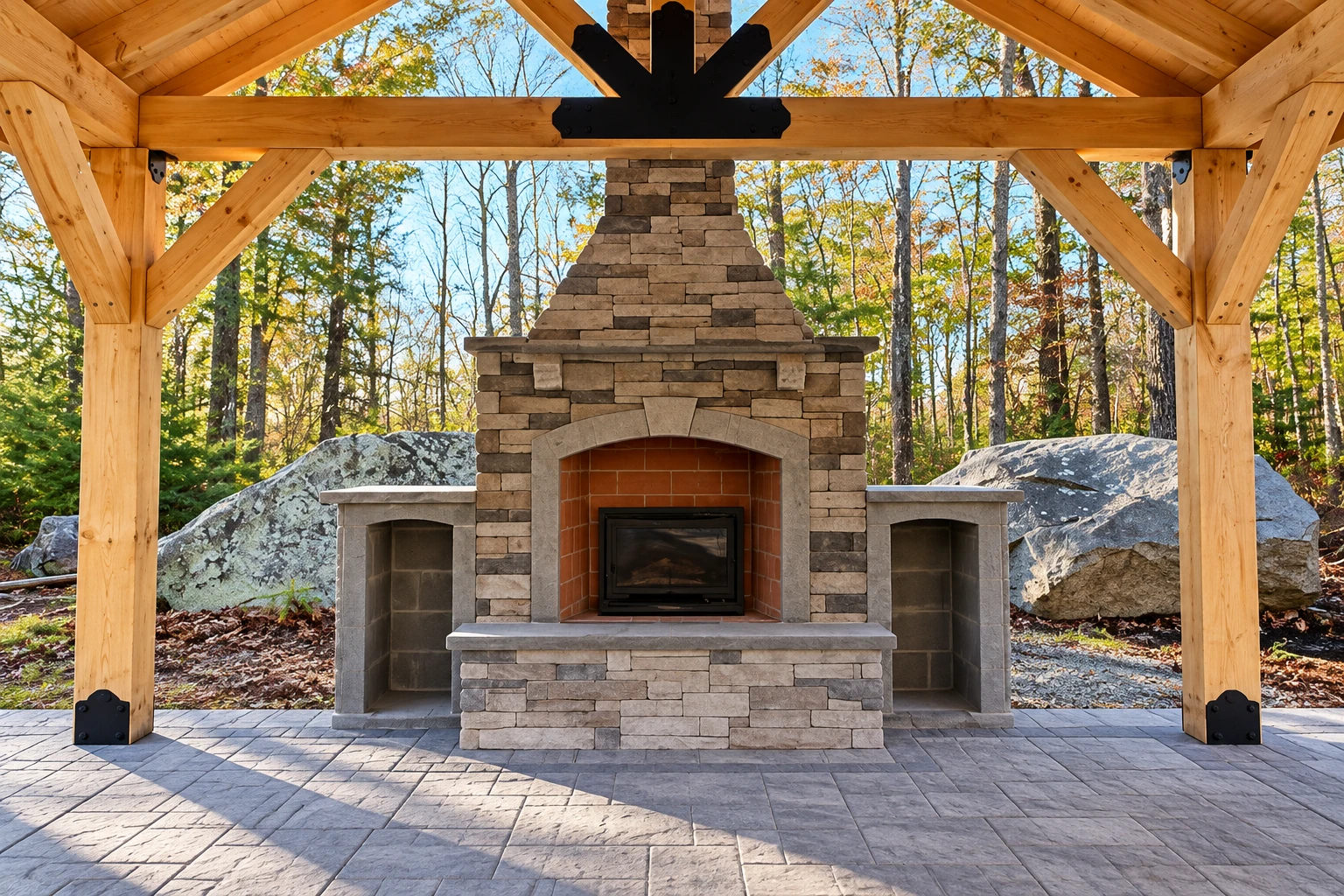
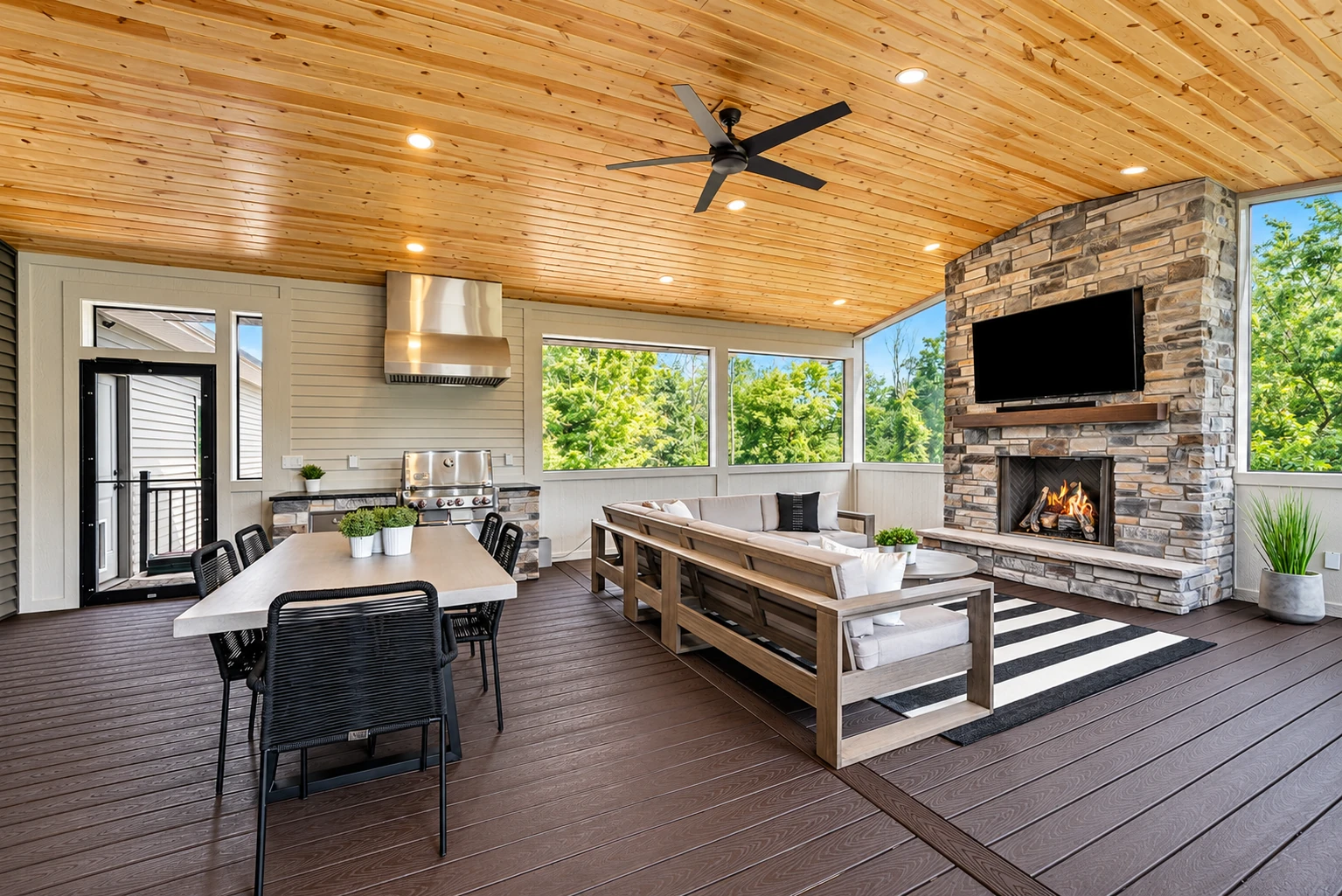
We build masonry fireplaces and surrounds, laying a firebrick box for the fire, the hearth and the face in brick or stone to fit the plan and room you've chosen.
Stone veneer gives a column, wall or fireplace the look of stone without the weight, and we set a moisture barrier behind it, since that's where veneer jobs usually fail.
Block walls for yards, garden beds and property lines go up straight when the footing is level and the cores are filled and reinforced where the wall needs strength.
For additions, garages and crawl spaces, we lay block foundation walls on a level footing, lined up with your plans and ready for the framing that sits on top.
We build the block or stone shell for grills, counters and bars, leaving the openings your appliances need, and plan the layout around how you actually cook outside.
A front walk that tilts or holds puddles usually has a thin base or no slope. We build walkways in pavers, brick, stone or concrete with a packed base and gentle pitch.
We build garden walls, screen walls and low brick walls that match your house, with a footing sized for the wall and caps that shed water off the top.
Natural stone steps, walls and borders take patience to fit, because every piece is different. We shape and set each stone so the joints stay tight and the work sits solid.
When only some joints have worn back, we repoint just those, raking out the loose mortar and packing in new mortar matched in color and strength to what's there.
Send the form and we'll get back to you within one business day to set a time. I'll come out, look at the job with you and write up a free estimate, with no obligation.
I look at the job myself and ask plenty of questions about what you've noticed, and I'm on site with our masons when the work starts, so nothing gets lost along the way.
Your estimate lists what the price covers, from tear-out and materials to cleanup, so you can read it line by line and know exactly what you're paying for.
That's our promise, and before we start I'll walk you through what's being done and what the finished work will look like, so we're picturing the same result.
Here's what homeowners in Loveland ask most about permits, contractor licenses and city records before a masonry project gets started.
Loveland's Building Division decides that, and since it issues permits for new construction, additions and alterations, it's the place to ask about your project. We check with them on every job and handle the application and inspections when a permit is needed. If plans need review, the city currently estimates 20 to 30 working days per round.
For some jobs, yes. Structural work in rental homes, multi-family buildings and non-residential buildings requires a City of Loveland Contractor's License, and any business sending workers into Loveland for repairs or installations needs a city sales tax license. In the home you live in, you can do your own work with a homeowner affidavit. We're licensed and fully insured.
Start with the city's Building Division, whose records system may hold residential foundation plans, engineer letters, site plans and Certificate of Occupancy records. What's on file depends on the year your house was built. If you want us to look at a foundation crack, those papers are worth pulling, because they tell us how the house was built to sit.
Each city below has its own page, and they're only some of the places we go. If yours isn't listed, call or send the form and ask.
Call (970) 292-7476 seven days a week from 7 AM to 11 PM, or send the form and tell me what you've spotted.